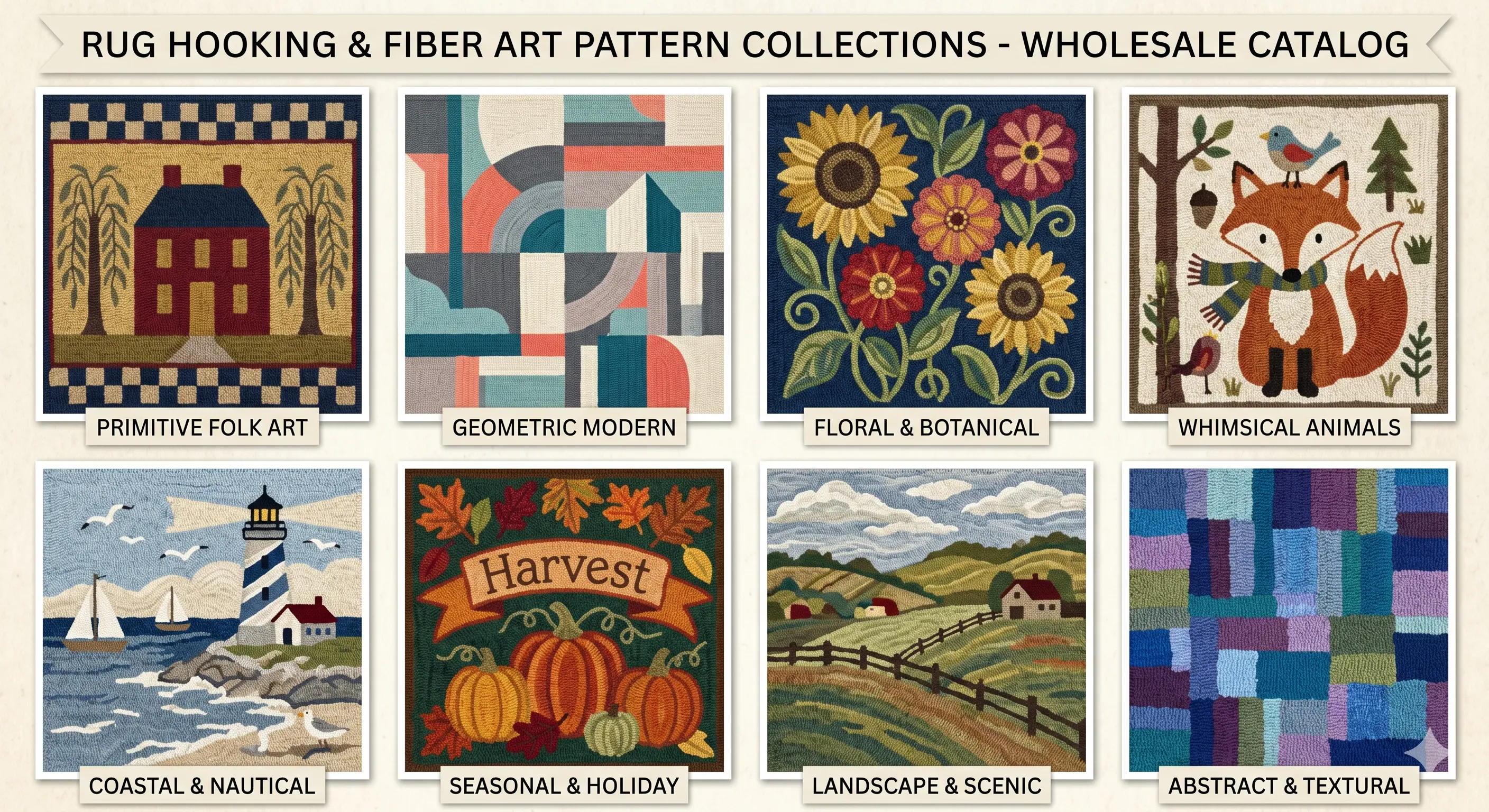
Build a pattern range around customer use
A good wholesale pattern program gives retailers a clear way to buy collections instead of unrelated one-off designs. Organize the range by technique, project size, skill level, theme and season so staff can guide customers toward a realistic project.
Main pattern categories
NatureBirds, animals and coastal themes
Recognizable subjects support seasonal displays, gifts and coordinated material bundles.
DecorFlorals and geometrics
Flexible palettes make these patterns useful across home styles and repeat workshops.
SeasonalHoliday and folk motifs
Time releases early enough for customers to finish projects before the relevant season.
Pattern information retailers need
| Field | What to specify | Why it matters |
|---|
| Finished size | Exact width and height | Supports material and display planning |
| Skill level | Techniques and difficult details | Sets realistic customer expectations |
| Materials | Backing, wool quantity, cuts and notions | Makes kits and add-on sales possible |
| Format | Printed pattern, drawn backing or digital file | Clarifies what the buyer receives |
| Rights | Class, kit, copy and image permissions | Prevents misuse and confusion |
Licensing and teaching
Before buying patterns for workshops, ask whether the designer allows class use, kit assembly, resizing or printed instruction copies. Do not assume that purchasing one pattern grants reproduction rights. Clear written terms protect the designer and make the product easier for a retailer to use correctly.
Samples, packaging and reorders
- Finished-project image with accurate color and scale
- Designer name, pattern title and stable SKU
- Protected packaging that keeps paper and backing clean
- Barcode or label space for retailer inventory
- Reliable availability and notice before discontinuation
Plan kits and color bundles
Pair proven patterns with coordinated hand-dyed wool and clearly list substitutions. A kit should contain enough material for normal variation in technique. Test the project before a class or large production run.
Legacy pattern names
Older inbound links such as Marsh Tacky Horse, Paisley Partridge and Paisley Bluebird are redirected here because they are pattern-style pages. This keeps old visitors in the correct topical area without copying archived material.